

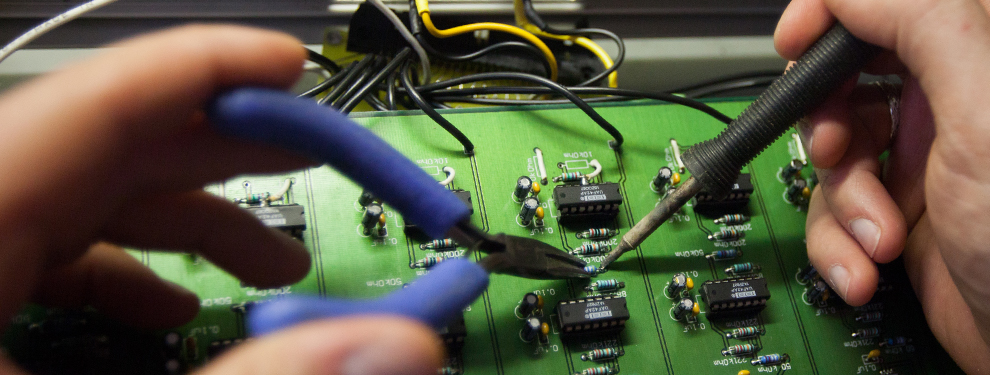
 Students and faculty are constantly working on creative solutions to the most difficult problems in medicine.
Research
Biomedical Engineering is an exciting and fast-moving field with ever-changing boundaries. Here at Northwestern we are pushing those boundaries in a number of interrelated areas.
Faculty members and students are active in developing novel technologies and capabilities across a host of technically challenging fields in biomedical engineering, as well as other scientific disciplines.
Fundamental Research Areas and Medical Applications
In each area of research, our faculty target multiple medical applications.
| Research Areas | Cancer | Cardiovascular | Drug Discovery and Delivery | Global Health | Rehabilitation | Vision |
|---|---|---|---|---|---|---|
| Biomechanics |  |
|
|
|
||
| Biomaterials and Regenerative Engineering | |
|
|
|
|
|
| Cell and Molecular Engineering | |
|
|
|
|
|
| Computational Biomedical Engineering | ||||||
| Imaging and Biophotonics | |
|
|
|
||
| Medical Devices and Instrumentation | |
|
|
|
|
|
|
|
|
|
Learn about our affiliated centers and institutes
Meet our award-winning faculty
Learn how to become involved in undergraduate research
Northwestern Scholars
To find out more about biomedical engineering faculty research, visit Northwestern Scholars, a searchable database of expertise across all disciplines a Northwestern University.